Vol. XVIII · Free shipping $75+ · Read the collection
Feature · Product Review
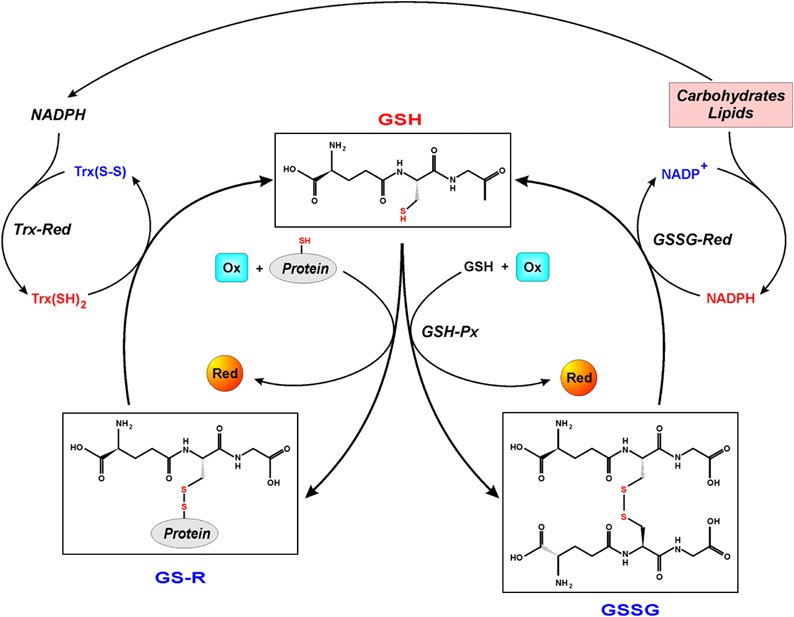
glutathione breaks disulfide bonds

glutathione breaks disulfide bonds Is Required to Regulate the Formation of Native within Proteins Entering the Secretory Pathway* Disulfide relays and phosphorylative cascades:

Disulfide relays and phosphorylative cascades: partners in redox mediated signaling pathways Cell Death & Differentiation Postulated mechanism for the reduction of GSSG by the reduced a domain Download Scientific Diagram Reaction formulas of disulfide bond reduced by a) GSH or b) DTT. c) Download Scientific Diagram Denaturing vs. reducing especially in the context of gel electrophoresis, such as SDS PAGE Glutathione reductase Wikipedia

SKU: 20743213174 · From www.ohotnichi-sezoni.com

4.4
USD26.71 USD58.71

Pay in 4 interest-free payments of $6.68 Learn more

Shipping Estimate
USA
  • USA
  • CAN

Ships within 48 hours · Estimated delivery Aug 6 - Aug 11
Description

E1A-mediated paclitaxel sensitization in HER-2/neu-overexpressing ovarian cancer SKOV3.ip1 through apoptosis involving the caspase-3 pathway

glutathione breaks disulfide bonds Is Required to Regulate the Formation of Native within Proteins Entering the Secretory Pathway* Disulfide relays and phosphorylative cascades:

Do not use it if your skin is damaged or broken and if you are pregnant

glutathione breaks disulfide bonds Is Required to Regulate the Formation of Native within Proteins Entering the Secretory Pathway* Disulfide relays and phosphorylative cascades:

Skin type: Suitable for all skin types, especially dull, dry, or uneven-tone skin

glutathione breaks disulfide bonds Is Required to Regulate the Formation of Native within Proteins Entering the Secretory Pathway* Disulfide relays and phosphorylative cascades:

Tricyclic antidepressants (TCAs) Amitriptyline and nortriptyline: Effective in managing PDPN by inhibiting monoamine reuptake and blocking sodium channels

glutathione breaks disulfide bonds Is Required to Regulate the Formation of Native within Proteins Entering the Secretory Pathway* Disulfide relays and phosphorylative cascades:

Glutamate receptors, AMPA, kainate and NMDA have also being recognized as crucial players at later stages of neurogenesis and have been clearly identified as critical elements of neuronal plasticity in newly born neurons in the adult brain AMPA, kainate, and NMDA are the three main receptors for glutamate

glutathione breaks disulfide bonds Is Required to Regulate the Formation of Native within Proteins Entering the Secretory Pathway* Disulfide relays and phosphorylative cascades:
Exchange/Return Notes
  • We offer a 30-day return/exchange service after receiving.
  • Final sale items are not eligible for returns or exchanges.
  • To process your return/exchange, please contact us at [email protected]
  • Please click here for more details>>> Return & Exchange Policy

You may also like

recommand products